
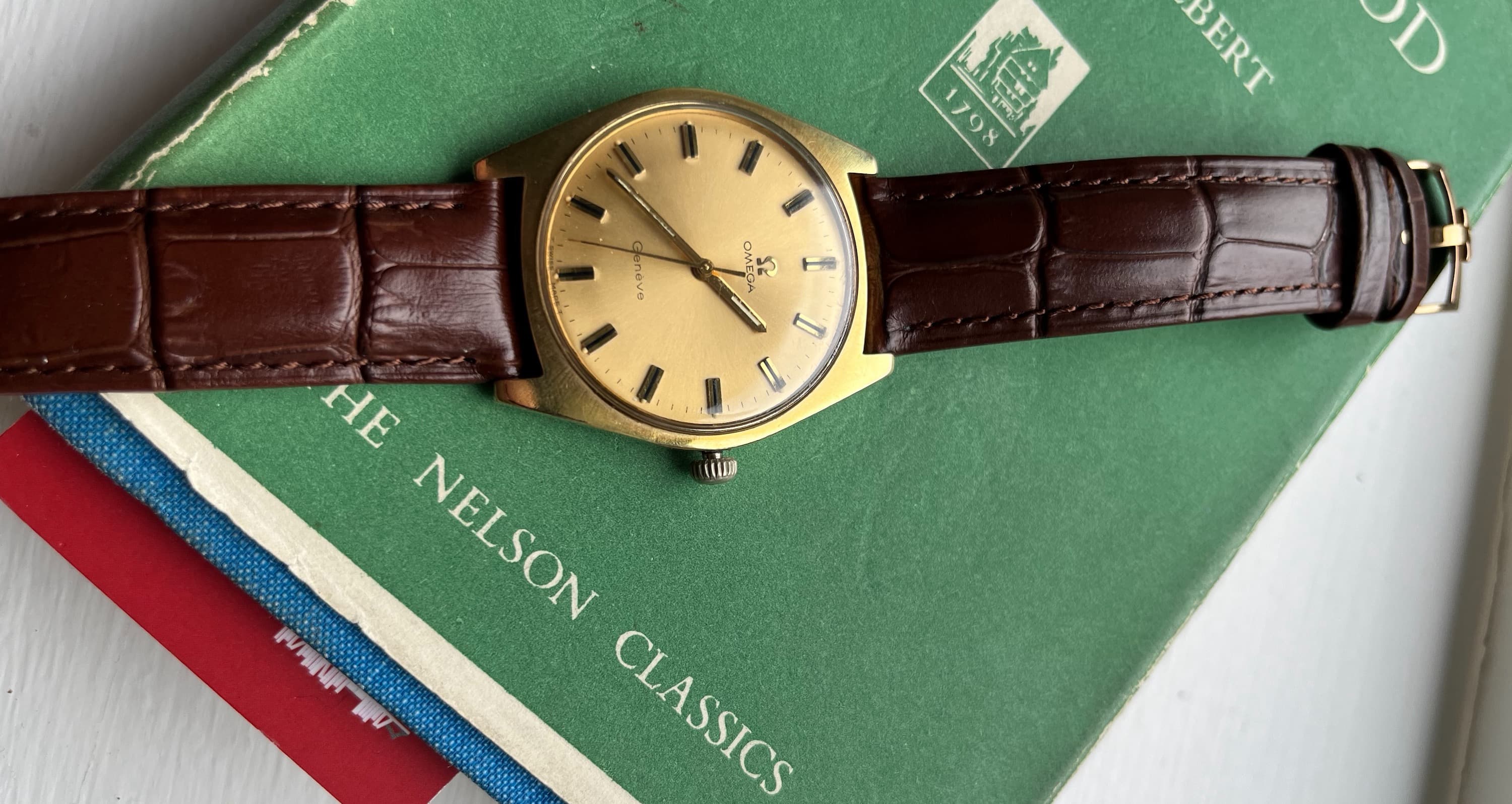
The picture above is of my Omega mechanical watch that I purchased for my wedding in 2016. It was handcrafted by a Swiss watchmaker in Biel/Bienne in 1969. The area is known as Watch Valley, where all Patek Philippe, Rolex, TAG Heuer, and many other fine Swiss brands have manufactured their watches since the 1700s. A watchmaker would go through years of apprenticeship, journeymanship, and finally mastery of their trade.
I loved the watch as soon as I wore it for the first time, and started to love it even more when I started reading about traditional watchmaking, and the love, skill and craftsmanship that went into making these timepieces. The year 1969 was special. Not only did we land on the moon that year (on which Neil Armstrong wore an Omega Speedmaster), but also it was the year that the Japanese watchmaker Seiko introduced the Quartz watch.
Electronic quartz watches were and are superior to mechanical watches from a precision, manufacturing and operation perspective. You don't need to wind them or move with them and they keep much more precise time (mechanical watches lose ~10 seconds per day, quartz lose ~1 second a year). They are much cheaper to manufacture to scale.
The writing was on the wall for traditional mechanical watches. Watch Valley was in trouble, sales of traditional watches dropped very quickly in the late 70s and 80s and many skilled artisans lost their jobs. Of course, it wasn't just quartz, the Swiss watchmaking industry had also become stagnant, overproduced and the Franc was expensive to export.
between 1970 and 1985 Swiss watch employment fell from over 90 thousand to 30 thousand employees
-Federation of the Swiss watch industry (FH)
So this is why I treasure my 1969 Omega watch, it represents the end of an era, the last of dying breeds. Over the weekend I listened to Yuval Noah Harari interviewed by Lex Fridman (warning it's 2 hours and 52 minutes long, nearly as long as Oppenheimer!). As it's 2023, of course, AI was discussed and Fridman commented:
And you very well could be one of the last historians, human historians to have ever lived.
Harari accepted that this very well could be true, that already the power of LLMs/AI shows that the days of the historian, may too be numbered. The brilliant mind of a craftsman like Harari, who spends two hours every day in silent meditation and has written some of my favorite books (like Homo Deus) may soon be obsolete.
Yet, history takes unexpected turns. The Swiss watch industry has made a healthy recovery, there's even a shortage of watchmakers. It turned out that people do not care about the accuracy of timekeeping, we care about the craftsmanship, the brands, and the legacy. Of course, we can't compare luxury goods to philosophical topics like history. It gives me hope that AI will not replace all forms of craftsmanship and that we will continue to value the skills and creativity of human craftsmanship.